
The advanced LASIK alternative that preserves your cornea
EVO ICL corrects nearsightedness and astigmatism without removing corneal tissue — a reversible lens, not a permanent reshaping.
Told you're not a LASIK candidate? High prescription, thin corneas, or dry eyes? You may still qualify.
- Reversible — the lens can be removed if your needs change
- Performed by Dr. Neda Shamie & Dr. Arjan Hura
- Trusted for high prescriptions LASIK can't safely treat
Prefer to call? (310) 882-6365
Schedule your EVO ICL Consultation
Takes about 60 seconds.
A tiny lens that lives inside your eye
A soft, flexible lens sits inside your eye — nothing reshaped, no tissue removed. Your cornea stays whole, the lens is invisible and never needs cleaning, and it can stay for good. It corrects prescriptions too strong for LASIK, and works with corneas too thin for it.
The EVO ICL is a soft, flexible lens that sits inside your eye — behind your iris, the colored part, and just in front of your own natural lens. It's made of Collamer, a material containing collagen your body already makes, which is why your eye accepts it so well.
Your cornea stays whole and your natural lens stays right where it is. The EVO ICL works with them to give you sharp, clear distance vision. It can stay in place for good, it never needs cleaning, and no one can tell it's there.
Because it corrects from inside the eye instead of reshaping the surface, it can treat stronger prescriptions than laser surgery safely can — including corneas too thin or too oddly shaped for LASIK.
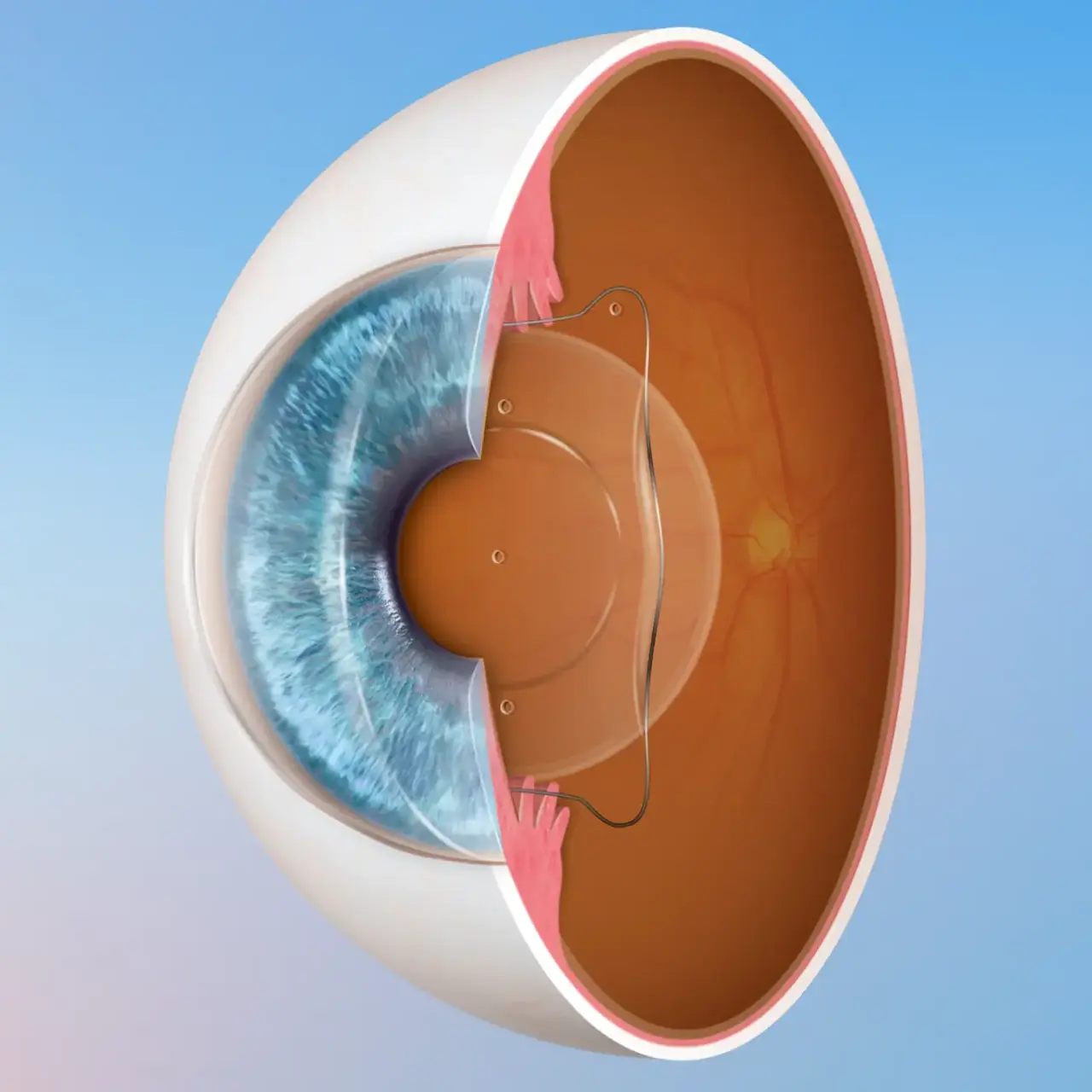
How EVO ICL works
Numbing drops, a micro-incision and a folded lens that opens into place behind your iris. Roughly 10–15 minutes per eye — no stitches, no patch, and most patients are seeing clearly by the next morning.
 01
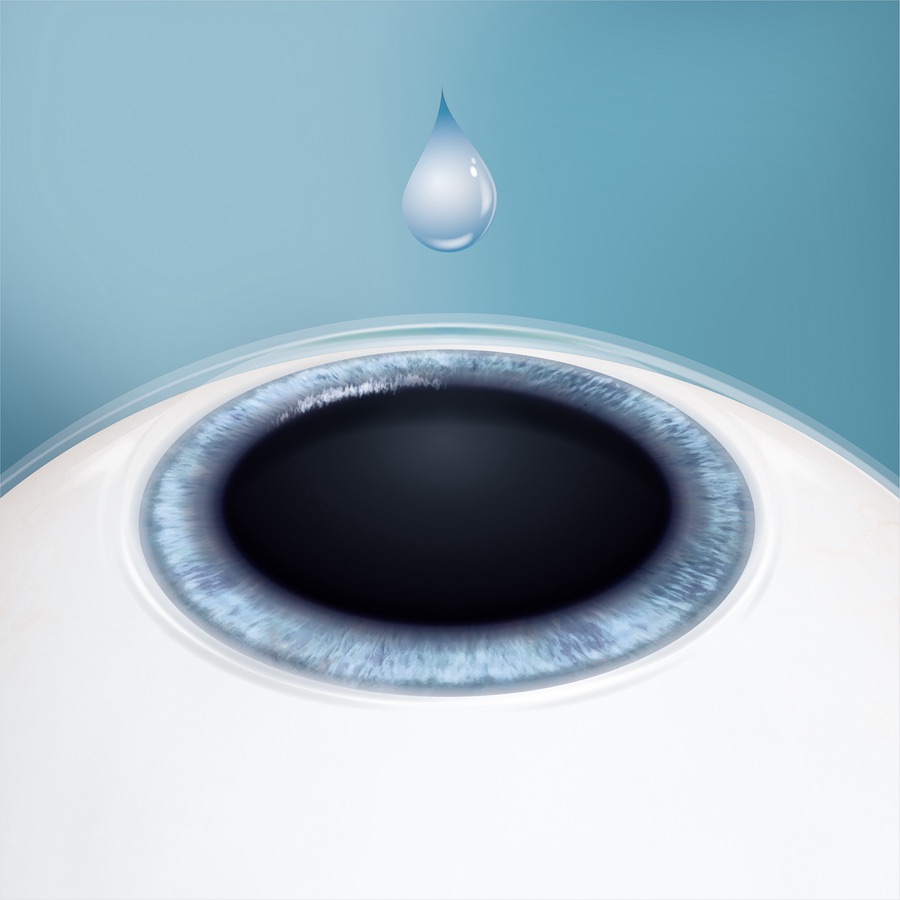
01Numbing drops
Anesthetic drops fully numb the eye and a mild sedative keeps you relaxed. You stay awake throughout and feel pressure and light rather than pain.
 02
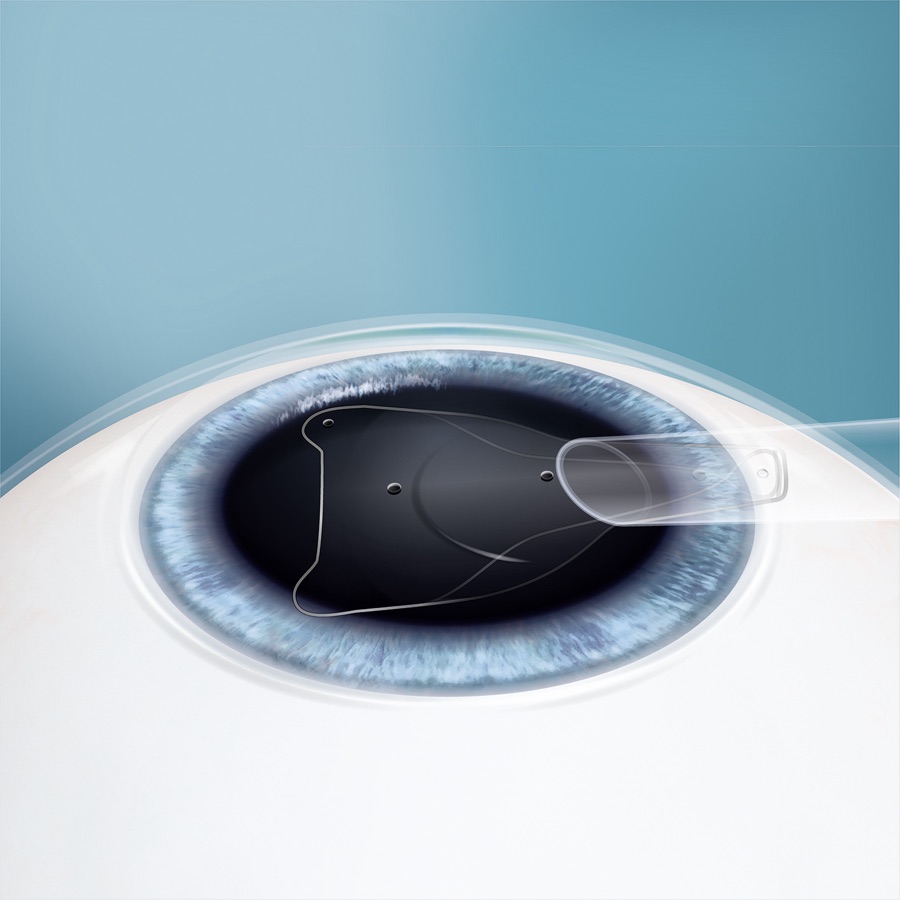
02The lens goes in
Through a micro-incision at the edge of the cornea, the folded EVO ICL is guided into the eye. Nothing is cut away and no corneal tissue is removed.
 03
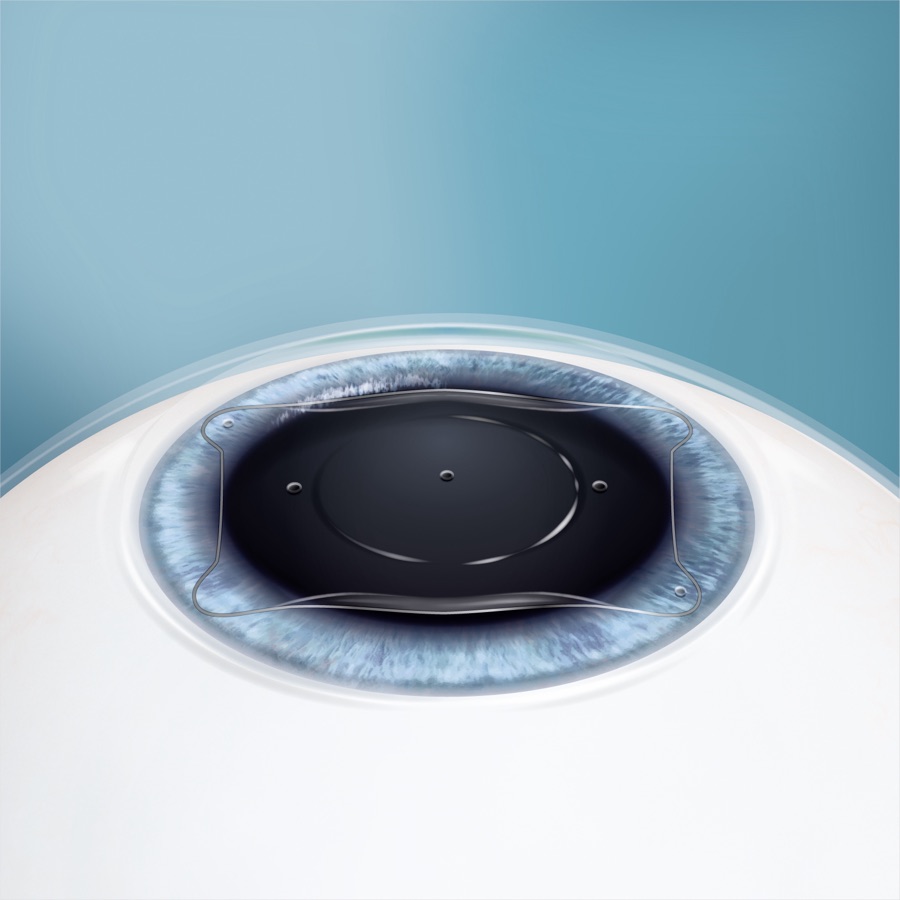
03It unfolds into place
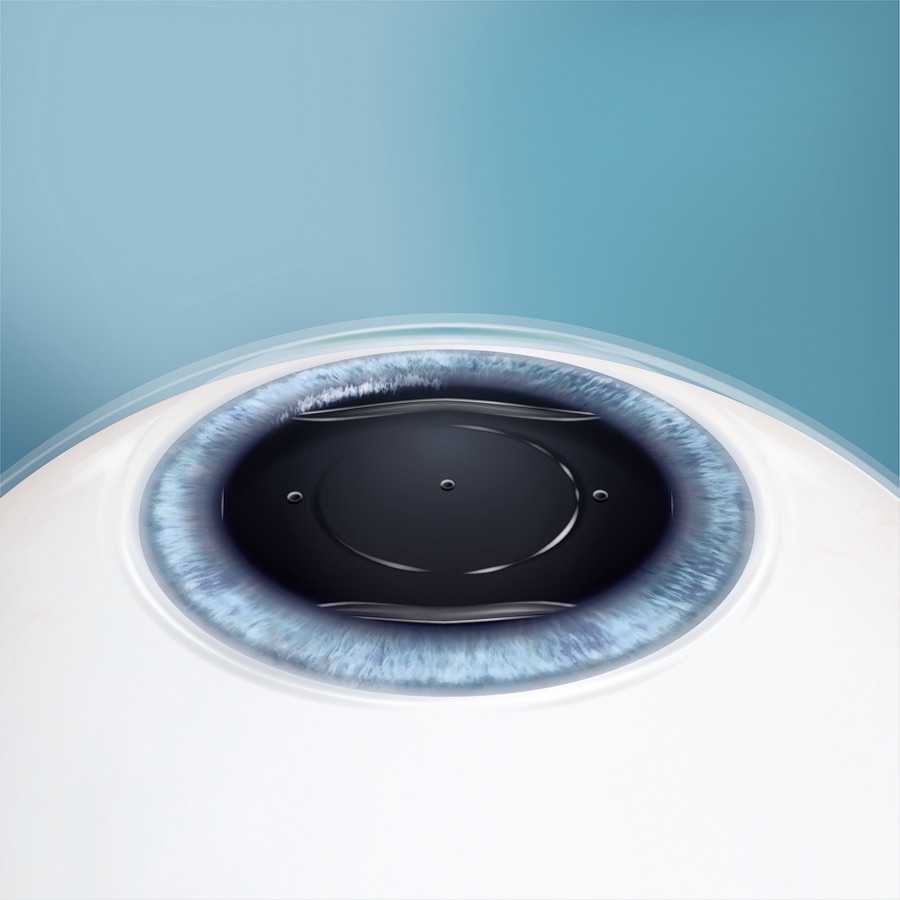
Inside the eye the lens opens gently to its full shape, and your surgeon centers it over the pupil.
 04
04Tucked behind the iris
The lens edges are eased behind the iris, in front of your natural lens, where the EVO ICL rests securely and out of sight.
 05
05Clear vision
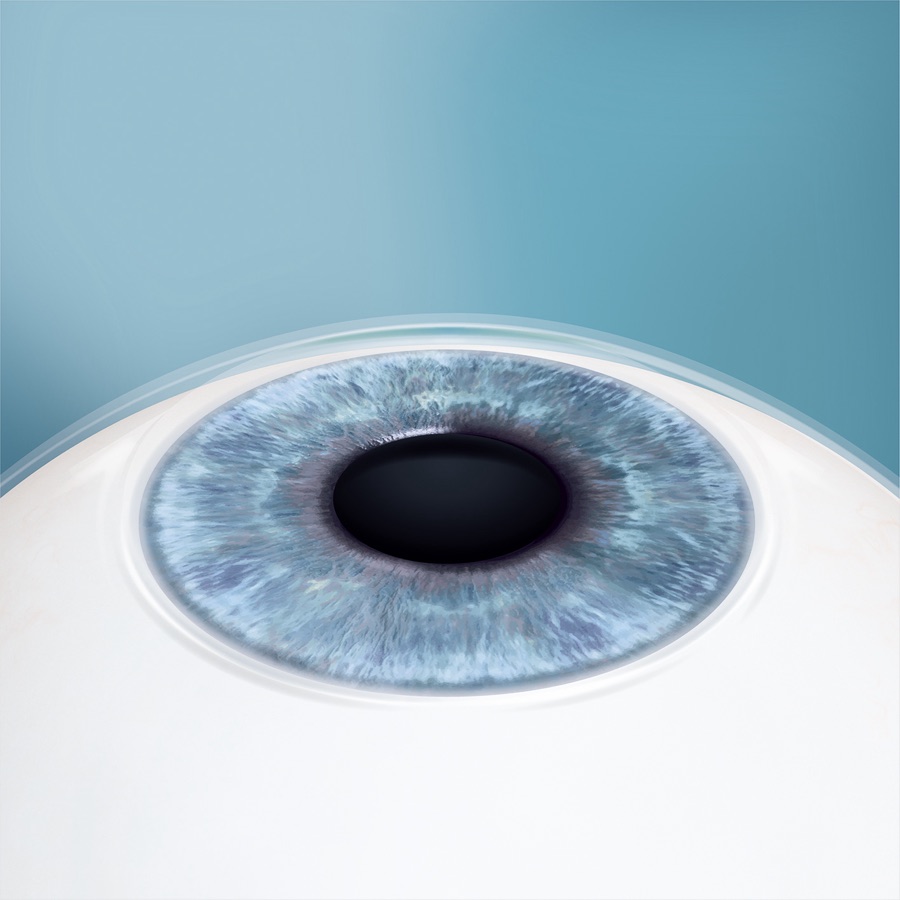
The incision seals on its own, with no stitches. Vision sharpens within hours, and the lens stays invisible — to you and to everyone else.
Six reasons EVO ICL wins
No corneal tissue removed
The EVO ICL is placed behind the iris and in front of your natural lens. Nothing is cut away, so your cornea keeps its structure and thickness.
Reversible by design
Unlike laser correction, the lens can be removed or exchanged if your vision or the technology changes over your lifetime.
Built for high prescriptions
Corrects moderate to severe nearsightedness, roughly -3 to -20 D, with or without astigmatism — ranges often beyond safe LASIK limits.
Friendlier to dry eyes
Because corneal nerves are largely undisturbed, patients prone to dry eye typically report far less post-operative dryness than with LASIK.
Sharp, high-definition optics
The Collamer lens filters UV, works with your eye's natural focusing, and delivers crisp night vision with excellent contrast.
Fast visual recovery
Most patients see clearly within a day and return to work and normal routines within about 48 hours.
EVO ICL vs. LASIK
Both fix nearsightedness, but they work in very different ways. Here's how they compare on the things patients ask about most.
- Corneal tissue
- Preserved entirely
- Reshaped permanently
- Reversibility
- Lens can be removed
- Not reversible
- Prescription range
- Up to about -20 D
- Typically to -8 D
- Dry eye risk
- Minimal
- Common, usually temporary
- Thin corneas
- Still a candidate
- Often disqualifying
ICL Guru Pro™ + Sonomed UBM
Next-generation precision in EVO ICL planning — technology most practices don't offer.
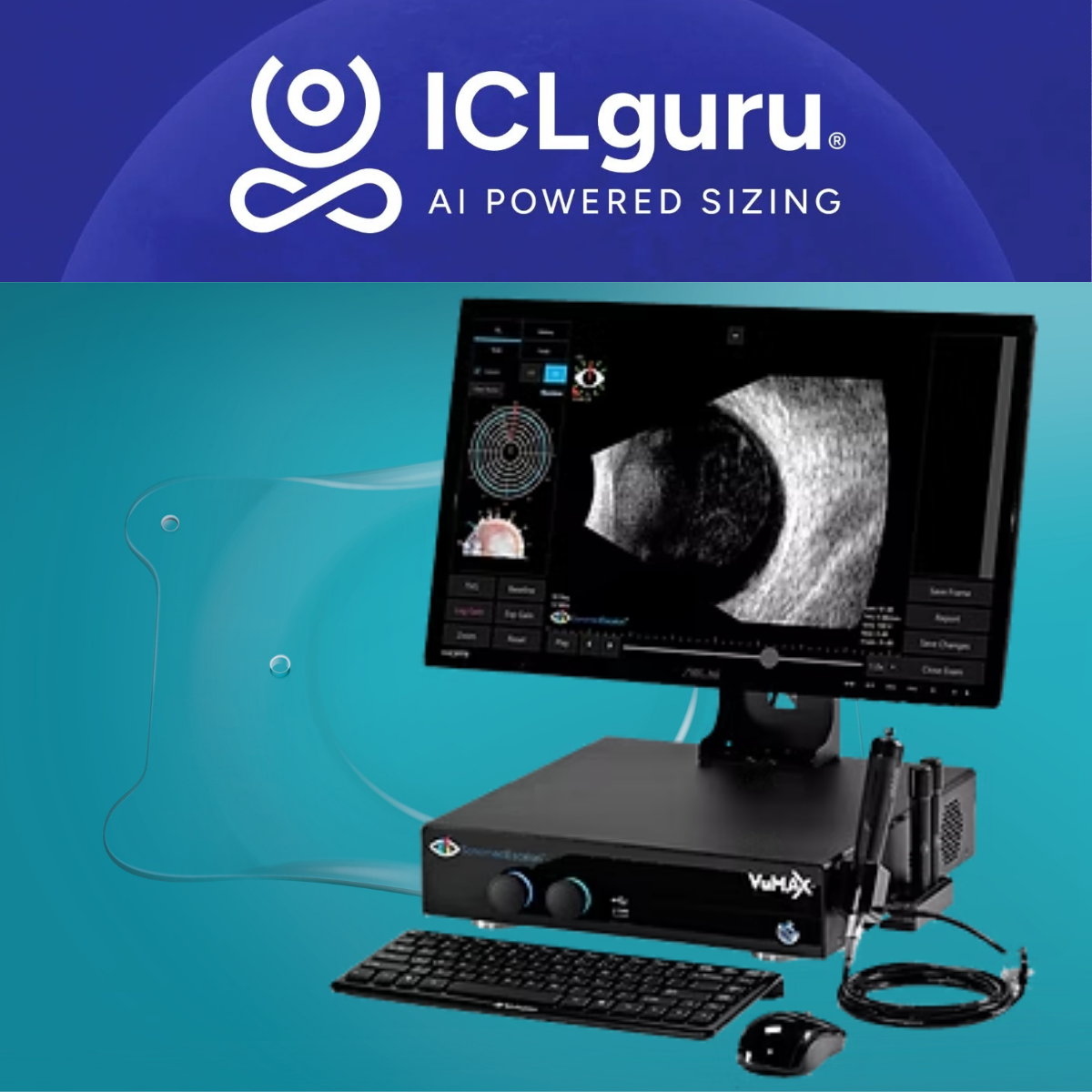
By combining ultra-high resolution ultrasound imaging with advanced AI modeling, we visualize your eye's internal anatomy in extraordinary detail and precisely predict how your EVO ICL will perform before your procedure even begins.
Why it matters
- Measures where the lens actually sits — not just external estimates
- AI-driven vault prediction for optimal lens positioning and safety
- Refined sizing accuracy for exceptional first-time outcomes
- Minimizes the need for lens exchange or adjustment
- Fully personalized planning based on your unique anatomy
Is EVO ICL right for your eyes?
A dilated exam is the only way to know for certain, but these are the markers we look for.
Likely a good candidate
- Age 21 to 60 with a stable prescription for at least a year
- Nearsighted from about -3.00 to -20.00 D, astigmatism up to -4.0 D
- Corneas too thin, too irregular or too steep for LASIK or PRK
- History of dry eye or an active lifestyle where a corneal flap is a concern
We'd recommend another path
- Pregnant or nursing, or a prescription still changing
- Shallow anterior chamber or low endothelial cell count
- Uncontrolled glaucoma, iritis or significant cataract
- Primarily farsighted or seeking reading-vision correction — ask about RLE instead
From first exam to clear vision
- 01
Comprehensive evaluation
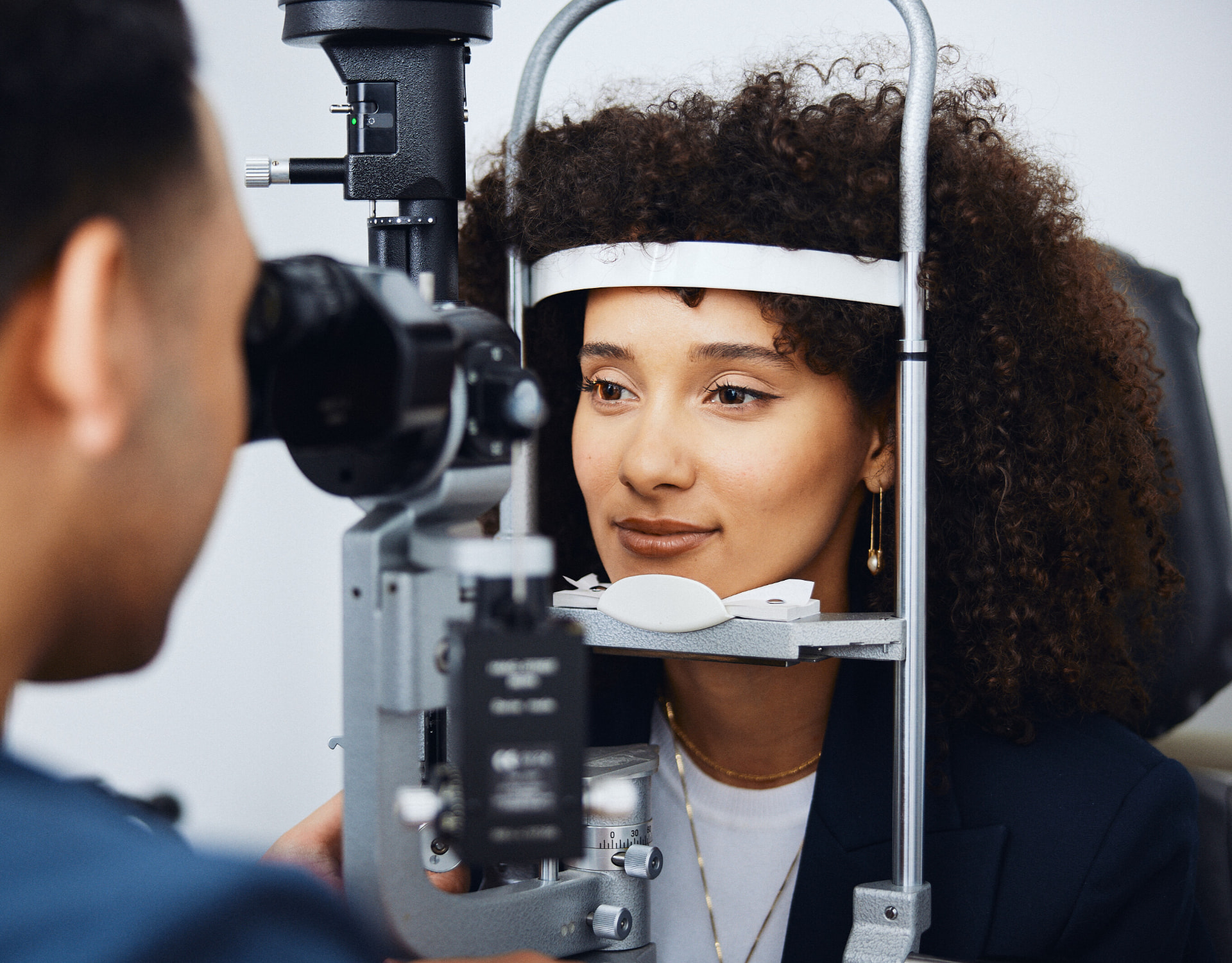
A 90-minute workup: refraction, corneal topography, anterior chamber depth, endothelial cell count and dilated retinal exam to confirm you're a candidate.
- 02
Custom lens ordering
Your surgeon selects the exact lens power, size and toric axis for each eye. The lens is manufactured to your measurements.
- 03
Procedure day
Numbing drops and light sedation. Through a micro-incision the folded lens unfolds into position. Roughly 10–15 minutes per eye, no stitches, no patch.
- 04
Recovery and follow-up
Vision sharpens within hours. Drops for about a week, visits at day one, week one and month one, then annual checks with your eye doctor.
Two specialists, one operating standard

Neda Shamie, MD
Refractive, Cataract & Cornea Surgeon
Internationally recognized cornea specialist and educator, known for advanced corneal transplantation and complex refractive cases, including high-prescription EVO ICL.

Arjan Hura, MD
Refractive & Cataract Surgeon
Fellowship-trained in cataract and refractive surgery, focused on precision lens-based vision correction and known for hands-on follow-up with every patient.
What EVO ICL patients tell us
Verified reviews from patients treated at our Westwood and Pasadena offices.
“ICL truly changed my life in a way that's hard to put into words. Immediately after surgery I could already see better than I ever could without my glasses — and by day two, I had 20/20 vision.”
“As someone with a -8.00 prescription, LASIK was never a viable option for me. Even while heavily dilated I was seeing 20/20 on the day of surgery — and I'm now seeing 20/15. The results have truly been life-changing.”
“I had -8 vision for over 20 years. Now, just three weeks later, my vision is incredibly clear at 20/10. The world looks beautiful in a way I've never experienced before.”
“There was finally a solution for someone with -15+ vision like mine. I was told I might reach 20/30 at best — I'm seeing 20/25 one week after surgery. No more thick glasses, and my eyes feel the best they've ever felt.”
“The surgery was quick, easy and painless. My vision was 20/20 in one eye and 20/15 in the other three hours later. Surgery was Friday and I was back at work Monday.”
“I wasn't a great candidate for LASIK due to dryness, and I appreciated how intentional Dr. Shamie was about the long-term health of my eyes rather than pushing a procedure that wasn't the best fit.”
EVO ICL, explained by our surgeons
Short answers to the questions patients ask most — plus real EVO ICL experiences.
Patient & media stories
Questions we hear every week

Find out if you're a candidate.
One appointment tells you everything: whether EVO ICL will work for your eyes, what your result would look like, and exactly what happens next. No pressure.
Prefer to call? (310) 882-6365 · Mon–Fri, 8am–5pm PT
Schedule your EVO ICL Consultation
Takes about 60 seconds.