

LASIK · EVO ICL · Lens Exchange — Los Angeles & Pasadena
Stop planning your day around your eyes.
Three procedures. One of them is built for your eyes.
Most people don’t know which one fits them — or whether they qualify at all. One consultation tells you exactly where you stand, from surgeons who have performed more than 65,000 procedures over 28 years.
4.9★ from 3,620 reviews
The problem
Glasses and contacts manage the problem. They don’t solve it.
You budget for lenses you lose. You pick sunglasses you can’t really wear. You reach for readers in a restaurant. None of it is a crisis — it is just a tax you have paid every day for years, and it gets bigger, not smaller.
Plenty of people assume they are stuck with it. They were told once that their prescription was too strong, their corneas too thin, or that they had simply aged out. That answer is often out of date — there are now three procedures, and they solve different problems.
Your options
Which one fits usually starts with your age.
Your natural lens starts to stiffen in your forties. That one change decides whether the right procedure reshapes your cornea, adds a lens, or replaces the lens you have.
Ages 21–45
Your natural lens still focuses
While your own lens still does its job, the goal is to correct the prescription in front of it — either by reshaping the cornea or by adding a lens inside the eye.
Ages 45 and up
Your natural lens is the problem
Once reading glasses arrive, correcting the cornea alone leaves the aging lens behind. Replacing it addresses near, intermediate and distance vision together.
These bands describe how your natural lens behaves, not a hard cutoff. EVO ICL is approved through age 60, and plenty of people under 45 are already reaching for readers. Your surgeon will tell you which side of the line you are actually on.
Video library
Hear it from your surgeons.
Short answers to the questions patients ask most, grouped by procedure.
WaveLight Plus LASIK
All LASIK videos →What is LASIK recovery like?
What are common side effects of LASIK?
What if LASIK isn’t right for me?
EVO ICL
All EVO ICL videos →What is EVO ICL?
Who is a good candidate for EVO ICL?
Advantages of EVO ICL over LASIK
Refractive Lens Exchange
All RLE videos →What is Refractive Lens Exchange?
Who is a good candidate for RLE?
What are my lens options?
The plan
Three steps, and you will know where you stand.
Book a consultation
Sixty seconds to request a time in Los Angeles or Pasadena.
Get a straight answer
A full diagnostic workup, then one recommendation from your surgeon — including “none of these” if that is the honest answer.
See clearly
The procedure itself takes minutes. Your surgeon follows you through recovery personally.
Your surgeons
Two specialists, one operating standard.

Neda Shamie, MD
Refractive, Cataract & Cornea Surgeon
Internationally recognized cornea specialist and educator, known for advanced corneal transplantation and complex refractive cases.
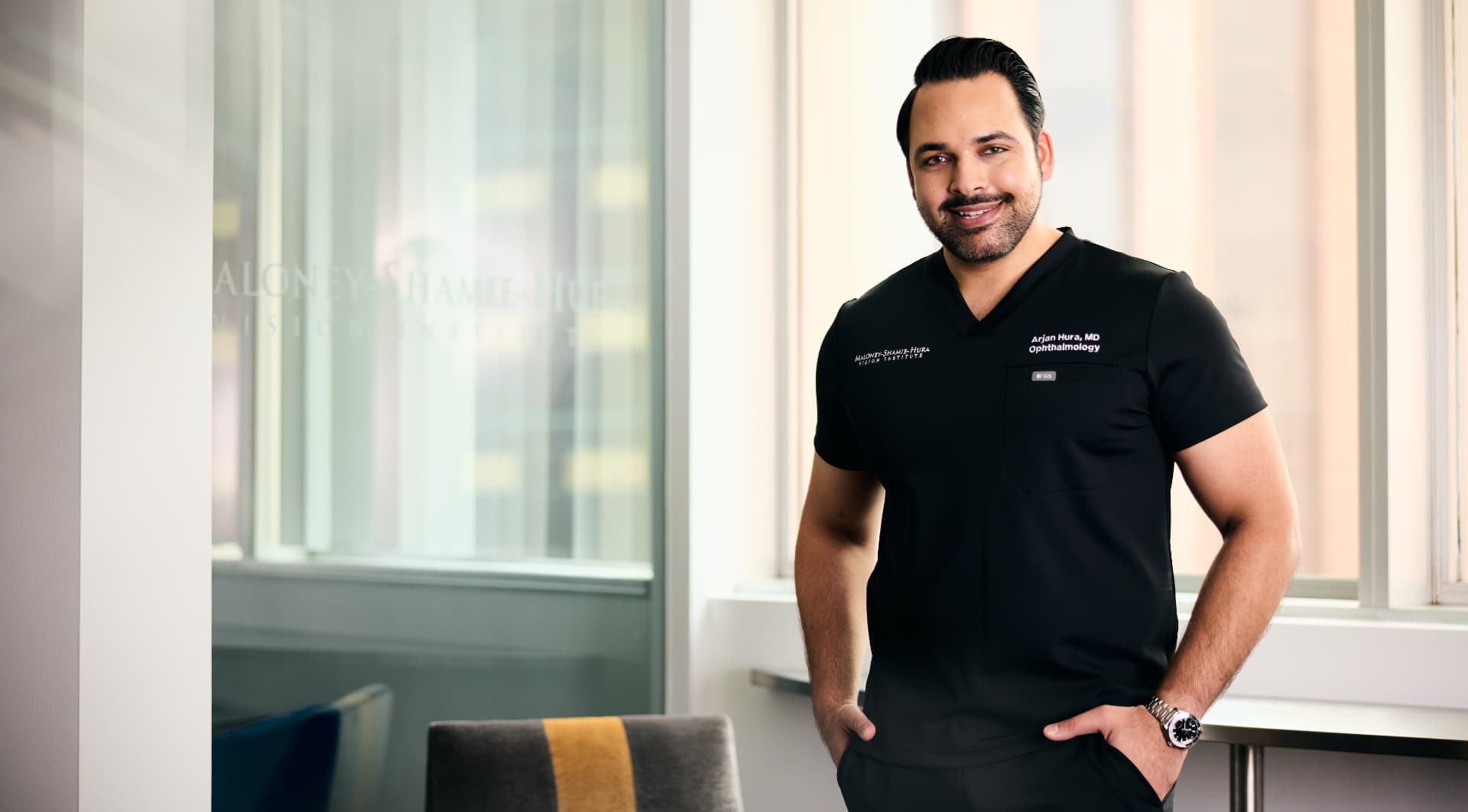
Arjan Hura, MD
Refractive & Cataract Surgeon
Fellowship-trained in cataract and refractive surgery, focused on precision vision correction and known for hands-on follow-up with every patient.
4.9★ from 3,620 reviews
What patients say afterward.
“Best decision I’ve made! I did same-day ‘fast track’ LASIK. Dr. Shamie was nothing short of incredible. I felt so safe and cared for. Should have done this 10 years ago. If you’re on the fence, DO IT!”
“Seven years ago I started struggling with reading small type. Over the years it got progressively worse — I had to use readers all of the time. Last month I had the procedure and my short, medium, and long range vision are all back. It is remarkable.”
Before you book
The questions everyone asks.
Age is the starting point, not the answer. The consultation measures your prescription, corneal thickness and shape, pupil size, dryness and the condition of your natural lens. Those measurements — not a category — decide the recommendation.
Often, yes. Many people were turned down for LASIK because of a high prescription or thin corneas. EVO ICL corrects from inside the eye and works in cases LASIK cannot, and lens exchange addresses a different problem again. It is worth being re-measured.
A full diagnostic workup, a review of your medical and ocular history, and a conversation about how you actually use your eyes. You leave knowing which procedure your surgeon recommends, what the result would realistically look like, and what it costs.
Numbing drops are used for all three procedures, and a mild sedative is available. Patients typically describe pressure and light rather than pain. You stay awake throughout and go home the same day.
Two offices: 10921 Wilshire Blvd. #900 in Los Angeles, and 50 Bellefontaine St. #203 in Pasadena. Consultations are available at both.
Your next step
Find out which one fits your eyes.
One appointment answers it. You will know which procedure your surgeon recommends, whether you qualify, and what happens next. No pressure.
- A full diagnostic workup of both eyes
- All three procedures explained, including why one fits you best
- A straight answer from your surgeon — even if that answer is no
- Los Angeles and Pasadena consultations available
Schedule your consultation
Takes about 60 seconds.